Sinners Movie Review & Coachella 2026: Art, Race, & Loop holes
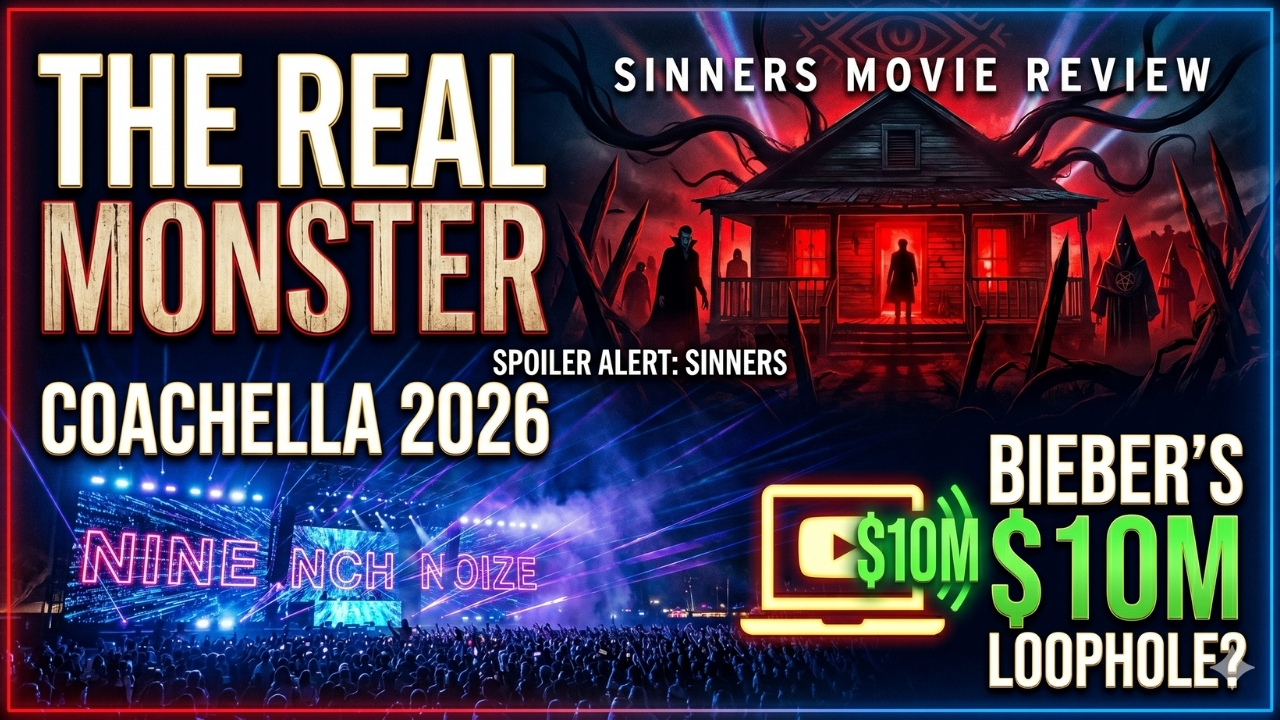
Frequencies of Resistance: From the Coachella Stage to Ryan Coogler’s 'Sinners'
Art has a unique way of mirroring our darkest realities, whether through the high-intensity strobe lights of a desert festival or the atmospheric dread of a 1930s Mississippi juke joint. In the latest episode of Parallel Frequencies, Blane and Coco navigate the cultural shifts of 2026, exploring how legacy artists are reclaiming their power and how modern cinema is using the supernatural to unmask very real systemic monsters.
The Coachella Paradigm: Age, Tech, and $10 Million Loop holes
The 2026 Coachella Valley Music and Arts Festival was a masterclass in modern media consumption. While the "Couchella" audience tuned in via multi-cam YouTube streams, the performances on the ground challenged the notion of what "live music" looks like in the digital age.
- The Ageless Punk: At 78, Iggy Pop delivered a set that defied biology. It was a reminder that raw energy and "original punk" spirit don’t have an expiration date, leaving 20-year-old attendees in absolute awe.
- The Bieber Business Model: Justin Bieber’s headline set sparked heated debate. By performing what some called a "laptop set," Bieber potentially utilized a brilliant legal workaround. By playing his own music through a digital playback system rather than a traditional live band, he may have bypassed massive licensing fees associated with his recently sold music catalog. Genius or low effort? We lean toward genius.
- Nine Inch Noize: The collaboration between Trent Reznor and Boys Noize transformed the Sahara Tent into a "Gothic Rave from Hell." At 60, Reznor continues to be the undisputed king of sonic tension.
Deep Dive: Why 'Sinners' is the Most Important Horror of the Decade
Shifting from the festival stage to the silver screen, Ryan Coogler’s Sinners is more than just a genre-bending vampire flick. It is "drama-horror" that taps into genetic memory to ground its audience in an environment of constant, suffocating pressure.
The Monster is Systemic
Set in Jim Crow-era Mississippi, the racial tension in Sinners is baked into every frame. The characters aren't merely reacting to racism; they are living in a state of constant anticipation of it. Blane notes that the film forces us to ask: Does racism create the monsters, or is the systemic oppression the actual monster—one that requires a supernatural visual metaphor like a vampire to finally be acknowledged by the masses?
The Reclamation of the Wise Woman
One of the most profound threads in the film is the role of Annie (Wunmi Mosaku), the community's "Wise Woman." Coco dives deep into how the historical term "Witch" was used for 6,000 years to delegitimize female wisdom and herbal medicine. In Sinners, the physical strength of the men is secondary to the ancestral knowledge of the woman who knows which roots, berries, and rituals are required to survive the night.
Soundtracks and Spiritual Signals
The music of Sinners acts as a secondary narrator. From the use of "I’d Lie to You" to the foreshadowing within "Wang Dang Doodle," the soundtrack provides the "frequency" of the film before the dialogue even begins. It connects the ancestral line to the future, much like the legendary sets at Coachella connect decades of musical influence.
At Ride The Wave Media, we leverage the best tools in the creator economy to bring these stories to life. We use Riverside for crystal-clear remote recording, Opus Pro to identify viral AI-driven highlights, and Podpage to house our digital community.
Are You Tuned In?
Don't miss a single frequency. Join the community and explore more deep dives into the media that moves us.
Uncle Phil Banks: The TV Dad Who Caught a Broken Kid