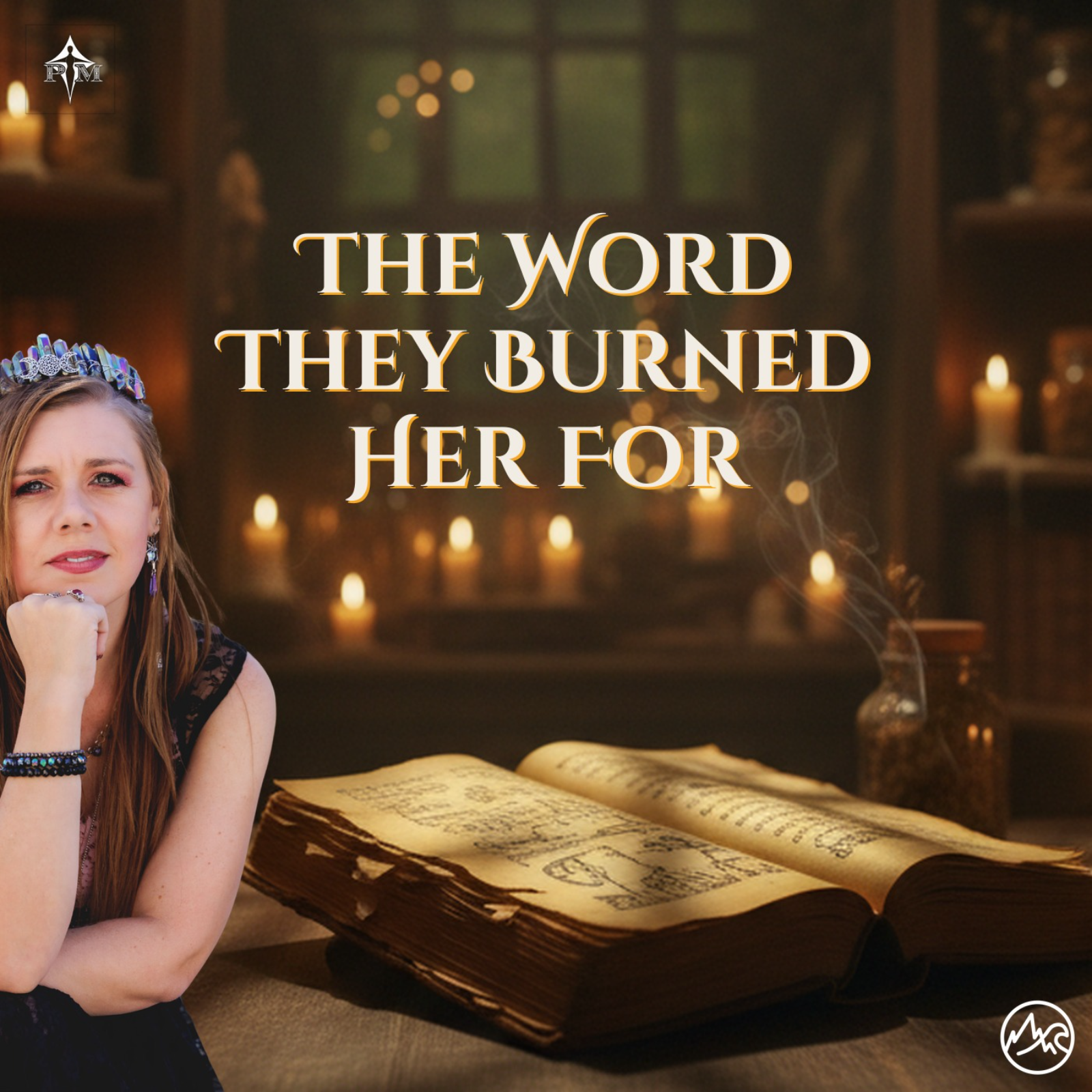
Reclaiming "Witch": Why the Word Still Matters More Than You Think
Reclaiming "Witch": Why the Word Still Matters More Than You Think
The word lands different now. Not because the definition changed. Because the women using it stopped apologizing.
Courtney Pearl stands in a networking meeting, introduces herself to strangers, and says it plainly: "I'm your local witch." No softening language. No reframing it as "energy healer" or "spiritual wellness practitioner"—though she's both. Just the word. Unfiltered. And watches to see who leans in and who pulls back.
Most people don't know they're holding centuries of fear in their reaction to that single word. But they are.
The Etymology Nobody Talks About
The word "witch" didn't start as an insult. It came from Old English—wicca, wicce—rooted in concepts of magic, sorcery, knowledge. Some etymologists trace it back to German roots meaning something closer to "bending and shaping reality." That's not devil worship. That's literally describing the act of changing perspective, shifting neural pathways, noticing what you haven't noticed before. That's the actual magic.
But somewhere between the medieval period and now, Christianity's spread across the world came with a rebranding campaign. A fierce one.
As the church consolidated power, things that were wild, natural, connected to the earth—they got demonized. Forests became dangerous. Women who spent time in them became suspects. Healers became threats. The goddess archetype that had represented balance and respect for nature got flipped into a warning: the devil is in the woods.
This wasn't accidental theology. It was strategic control.
Women who knew medicine, who kept seeds, who read the seasons, who helped births and eased deaths—they had economic power. They had community respect. They didn't need a husband or the church to survive. So the word "witch" got weaponized. It became the thing you accused a woman of when you wanted to take her livelihood, her reputation, her life.
The Salem trials. The burnings across Europe. The spinsters—women who spun yarn because it was one of the only trades society allowed them to pursue alone—became synonymous with witchcraft because they had the audacity to support themselves.
And we're supposed to believe that's history.
The Patriarchy Didn't Go Away, It Just Got Quieter
Here's what Courtney doesn't say directly, but the transcript makes clear: the witch hunts never ended. They just changed uniforms.
In Utah—a state founded and settled by Mormon pioneers, where the church still holds significant cultural weight—the word "witch" still carries the same sting it did in the 1600s. Different theology, same fear of women who claim their own power.
Courtney talks about being removed from an Instagram reel by a "very inclusive" community because she joked about everyone using witchcraft. One person. Taken out. Made to feel unwelcome. In 2024.
She also mentions a woman in Pennsylvania fighting a court case because she owns a metaphysical shop and reads tarot in a state where tarot was technically illegal. Not a thing of the past. Right now. A woman trying to make a living with her gifts, and the government is trying to shut it down.
The word "witch" is still dangerous because female autonomy is still threatening to systems built on control.
And that's not hyperbole. It's pattern recognition.
What Witchcraft Actually Looks Like Today
Here's where it gets interesting. Courtney does Reiki. She does energy healing. She studied at a rigorous year-long program at the Institute of Healing Arts. She's trained in integrative processing techniques, chakra work, sound healing, breathwork.
The LDS church has had conversations about whether this work is "of God" or not. But here's the thing—a lot of LDS members do this work anyway. They just don't call it witchcraft.
Why? Because the word still carries a stigma that the work itself doesn't deserve.
Cancer research centers are now studying Reiki practitioners and documenting actual improvements in patient outcomes. Breathwork is being legitimized by neuroscience. Sound healing has peer-reviewed studies. The work is being validated by science and medicine. But if you call it witchcraft instead of "energy healing," suddenly people get uncomfortable.
Same work. Different name. Different reaction.
Courtney's argument is simple: why is it different? If you're setting intentions, performing a ritual, using hands-on healing—which Jesus did, by the way—you're engaging in the same process as someone who calls themselves a witch. The only difference is what you call it.
And that difference matters. Because words have power. Because calling something by its true name is an act of sovereignty.
The Reclamation
This is where Courtney digs her heels in. Not defensively. Deliberately.
She's aware that using the word "witch" costs her. Some people won't take her seriously. Some will assume things about her that aren't true. Some will pull back, like she's dangerous, when she's actually trying to help them.
She does it anyway.
Because the women who were accused, hunted, burned—most of them weren't actually doing anything wrong. They were just women in total control of themselves. Earning a living. Helping their community. Speaking up. Standing for people who were voiceless.
If that's what makes you a witch, Courtney says, then yeah. I'm a witch. And I'm honored to be.
There's a reclamation happening here that goes beyond semantics. It's about refusing the shame that was assigned to female power. It's about saying: I will not soften my language so you feel comfortable. I will not wrap my gifts in euphemisms so you'll like me better. I will tell you who I am, and if you're meant to work with me, you will.
That's not arrogance. That's clarity.
The Question Nobody Asks
One of the most honest moments in the transcript is when Courtney addresses the question she sees constantly in beginner witch Facebook groups: "Can I be Christian and a witch?"
Her answer: she still considers herself a Gnostic Christian. She respects Christianity as it was originally intended—Jesus's teachings, before it became hierarchical and patriarchal and Roman. And she sees no difference between that form of Christianity and witchcraft.
Jesus did hands-on healing. He taught in groups. He was ostracized and killed for speaking up, for making kindness and spirituality a message for people.
By her definition, Jesus was a witch.
That's not heresy. It's just pointing out that the categories we've been given—Christian or witch, spiritual or religious, acceptable or dangerous—were never real divisions. They were always just tools for control.
The Howling Wolves
Toward the end of the episode, Courtney shares a moment when someone tried to "help" her by suggesting she soften her language. Use "energy healing" instead of "witchcraft." Be more approachable. Don't prickle people.
Her response: "If I howl with the wolves, the right people who are meant to be with me will howl with me. The people who think it's weird or uncomfortable won't. And that's okay. They don't speak my language."
This is the philosophy that Ride The Wave Media is built on. Not trying to be everything to everyone. Not softening the edges to fit more people. Being so specific, so honest, so unapologetically yourself that the right people find you.
Because when you try to please everybody, you end up pleasing nobody. Least of all yourself.
The word "witch" is a test. Not of her. Of the listener. Of whether you're willing to examine your own biases. Whether you're willing to let someone define themselves rather than accepting the definition society handed you.
Listen to the full episode at https://youtube.com/@PracticallyMagick | More at https://ridethewave.media/practically-magick