Did The Bride Get Justice or Revenge?
Did The Bride Get Justice or Revenge? (And Does It Even Matter?)
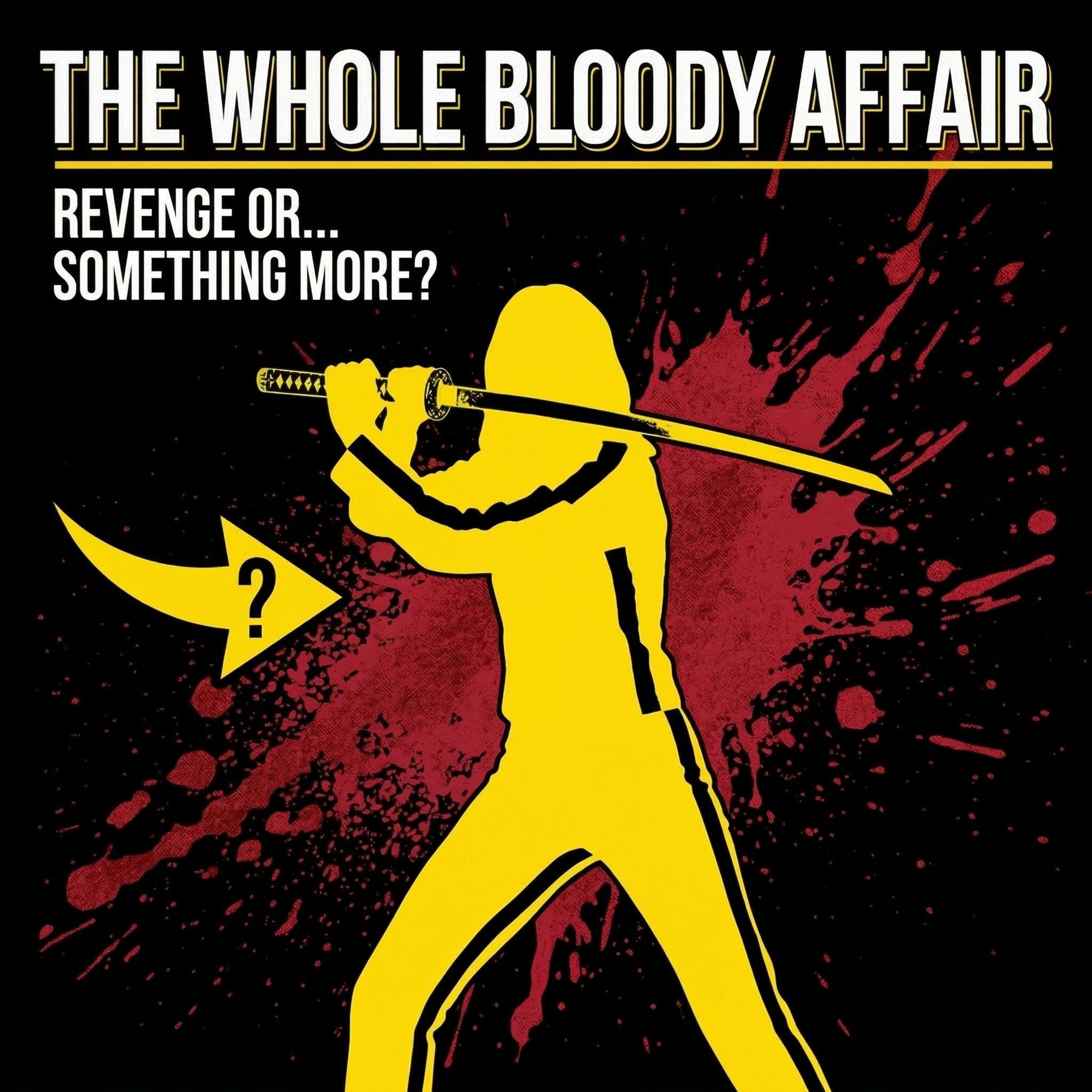
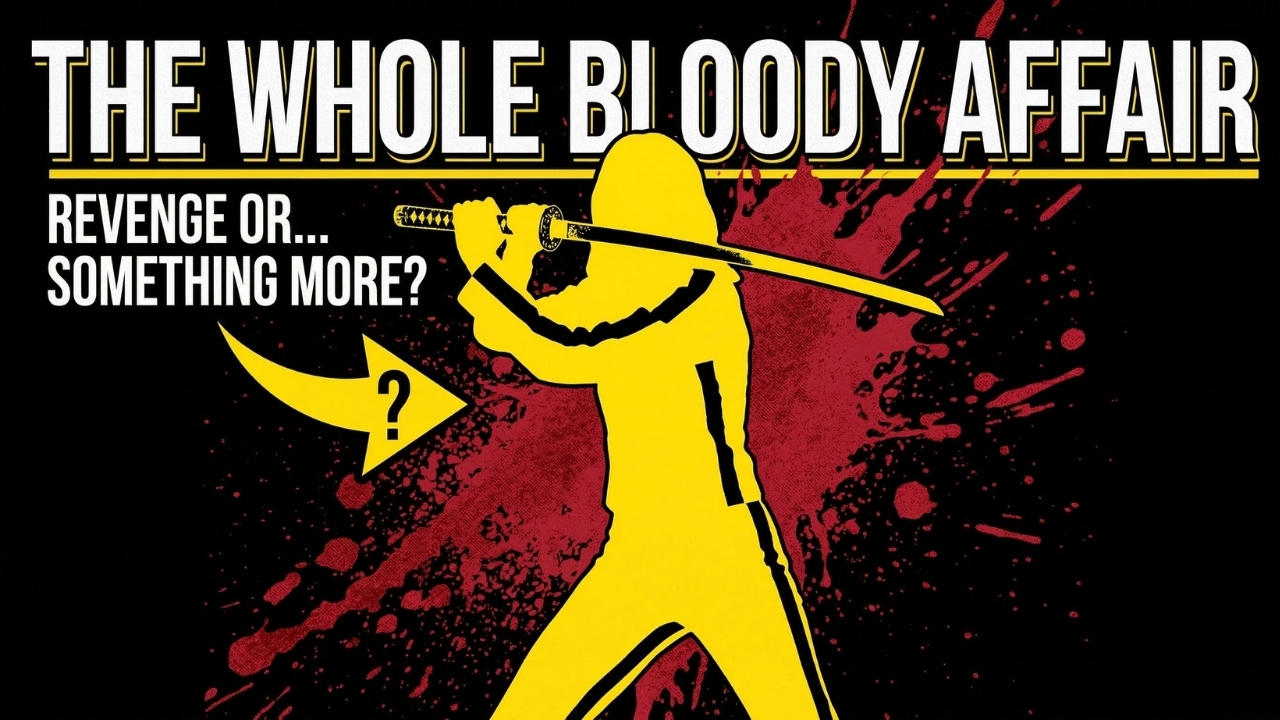
Let's start with the big question: Did the Bride get justice or revenge?
Think about it. Uma Thurman's character wakes up from a coma, discovers her baby's gone, and goes on an international killing spree to cross names off a list. That's revenge, right? Cold, calculated, bloody revenge.
But here's the thing—Bill and the Deadly Viper Assassination Squad shot her in the head at her own wedding, killed everyone in the chapel, and left her for dead. So when she shows up at O-Ren Ishii's place demanding satisfaction, when she rips out Elle Driver's remaining eye in that trailer, when she finally confronts Bill himself—is that revenge? Or is it justice that the system would never give her?
We're diving into Kill Bill this week for Women's History Month, and there's a reason this movie hits different in 2026. It's not just about the fights (though we'll get to those). It's not just about the style (though Tarantino's fingerprints are all over this thing). It's about watching a woman refuse to be erased, refuse to stay buried, and refuse to let the men who tried to kill her go unpunished.
Let's talk about why this movie is a master class in style meeting substance.
Why Kill Bill Still Matters (Especially During Women's History Month)
When Kill Bill dropped in 2003, it did something Hollywood rarely did: it centered an entire revenge epic around a woman. Not a woman playing second fiddle to a male hero. Not a love interest who occasionally throws a punch. A woman who is the entire story.
The Bride (Beatrix Kiddo, though we don't learn that until Volume 2) doesn't need a man to save her. She doesn't need validation. She needs a Hattori Hanzo sword and a list of people who need to die. And she goes methodically, brutally, beautifully through that list.
What Makes This Different From Every Other Revenge Film
Most revenge movies follow a predictable pattern: man loses something (wife, daughter, dog), man gets angry, man kills everyone. The emotional arc is thin. The motivation is surface-level. The violence is cathartic but empty.
Kill Bill flips that. The Bride's motivation is layered:
- She lost her child (or so she thinks)
- She lost her chance at a normal life
- She was betrayed by people she trusted
- She was left for dead and erased
When she wakes up from that coma and whispers "wiggle your big toe," you're not watching a woman who's angry. You're watching a woman who's been fundamentally broken and is rebuilding herself into something terrifying.
The Crazy 88 Fight: Nine Genres in One Movie
Let's talk about the House of Blue Leaves sequence. The Crazy 88 fight scene.
This is where Tarantino shows you exactly what he's capable of. You get:
- Samurai cinema with the sword fights
- Hong Kong action with the choreography
- Anime-style blood spray (literal fountains of it)
- Black-and-white cinematography when the violence gets too intense for color
- Slow-motion beauty shots
- Chaotic handheld camera work
You could show this scene out of context, remove Uma Thurman, and people would think it's a completely different movie. Then you show them the Elle Driver trailer fight with the snake, and they'd think it's another movie. But it's all Kill Bill. That's the genius.
I have a legitimate phobia of snakes. Like, feet-off-the-ground, blanket-pulled-up phobia. That trailer scene kills me every time because the entire time I'm thinking "where's the snake? Where's the snake?" But I love that scene. The split-screen moment when they each kick each other and fall back? S-tier. A-plus. Signature Tarantino attention to detail.
The Anime Backstory: O-Ren's Origin Story
Can we talk about how genius the anime sequence was?
Tarantino could have given us O-Ren Ishii's backstory through flashbacks. Instead, he gives us full anime—bloody, stylized, emotionally devastating anime that makes you care about a character who's on the Bride's kill list.
The version in The Whole Bloody Affair (the extended cut) has an even longer anime sequence. You sit there watching O-Ren's origin, and by the time it's done, you understand her. You almost don't want the Bride to kill her.
That's storytelling. That's giving your antagonists humanity.
Coco mentioned she wanted anime backstories for all of them—Elle Driver, Vernita Green, Budd. Maybe that's what Volume 3 could be. Or maybe Tarantino writes a graphic novel. At this point, we'll take it in any format.
The "I'm the Boss of You" Patriarchy Breakdown
There's a scene in Kill Bill that most people don't pay attention to, but it's everything.
Budd is working at a strip club. His boss says, "I'm the boss of you." And Budd, a former member of the Deadly Viper Assassination Squad—a man who was once a top-tier assassin—just takes it. Because in this world, there's always a boss. Always a hierarchy. Always someone above you telling you what to do.
That's patriarchy in a nutshell. Not "men are bad." But: systems designed to control everyone underneath the top, especially men. The guys at the bottom think they have power because they're "soldiers" or "tough guys" or "doing what's right for the boss." But they're disposable. They're meant to die for someone else's profit.
And when Budd walks out into the world still living under that "I'm the boss of you" energy? The Bride kicks his ass.
That's the theme of the entire movie. The Deadly Vipers were controlled by Bill. The Crazy 88 were controlled by O-Ren. Everyone's answering to someone. Everyone's trapped in the hierarchy.
Except the Bride. She broke free. She woke up from the coma and said, "No one's the boss of me anymore."
Tarantino vs. AI: Why Kill Bill Can't Be Replicated
I know some people tune out the moment they hear "Tarantino." But you have to admit: this guy's done a lot for film.
Here's my prediction: when AI takes over making movies, it won't be able to make Kill Bill.
Why? Because AI can replicate patterns and mimic style. But it can't make the choices Tarantino makes. The split-screen. The anime detour. The decision to go black-and-white mid-fight. The needle drops. The chapters.
AI doesn't have taste. It doesn't have intuition. It doesn't know when to break its own rules.
That's what makes Kill Bill timeless.
Behind the Scenes: How We Make These Episodes
We record every episode of Parallel Frequencies using Riverside, which gives us studio-quality audio and video. When we're geeking out about the Crazy 88 fight or debating justice vs. revenge, it sounds professional—not like we're recording in a tin can.
Once the episode's done, we use Opus Pro to create clips for social media. That way, when someone asks "what are you watching?" on Instagram, we can show them the exact moment we're breaking down Tarantino's genius.
Our website runs on Podpage, which automatically updates with new episodes, transcripts, and everything the Freqs need to dive deeper.
These tools let us focus on what matters: having conversations worth having about movies worth watching.
What's Coming This Week: Alien, Trailer Park Thursday, and The Last Showgirl
This is a massive week for Parallel Frequencies. Here's the lineup:
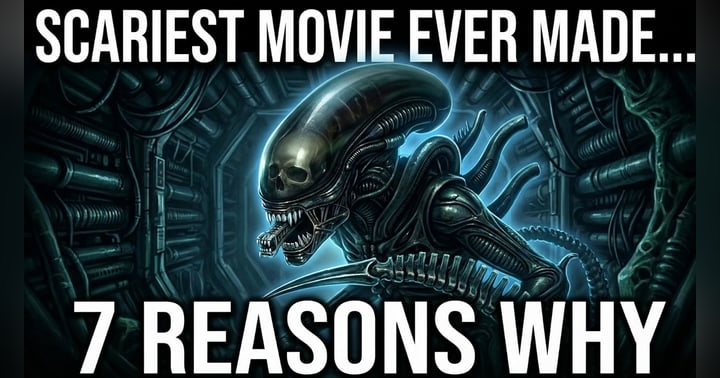
Wednesday: Alien and why it's the scariest movie ever made. Sigourney Weaver as Ripley is the biggest heroine there's ever been.
Thursday: Trailer Park Thursday—all women, all amazing podcasts you need to hear.
Friday: The Last Showgirl with Pamela Anderson in a performance you haven't seen from her before.
Stay tuned, Freqs.
Your Turn: Justice or Revenge?
Here's the question we're leaving you with: Did the Bride get justice or revenge? Or is there even a difference?
When the system fails you—when the people who hurt you will never face consequences through "proper channels"—is taking matters into your own hands revenge? Or is it the only justice available?
Drop your thoughts in the comments. And tell us: What's your favorite Kill Bill moment?
Subscribe and Ride the Wave With Us
If you're not already subscribed to Parallel Frequencies, this is your moment. We're covering the movies that matter—the ones with depth, the ones that make you think, the ones you can watch a hundred times and still find something new.
Subscribe wherever you listen to podcasts. New episodes drop daily.
Visit Ride The Wave Media for full episodes, exclusive content, and the complete archive.
Keep engaging. Keep commenting. Keep telling us what you think. This show works because of the Freqs out there who show up every day.
This is one of our favorite projects we've ever worked on. We're having fun. We hope you are too.
See you on the other side, Freqs.
—Just Blane & Coco Parallel Frequencies
Why Alien (1979) Is Still the Scariest Movie Ever Made