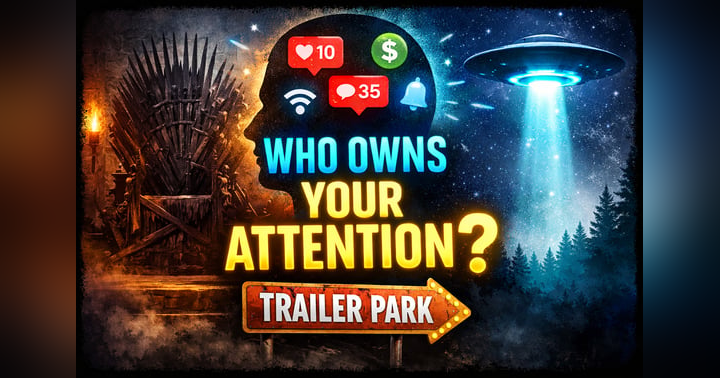
What Makes a King? Dunk, Egg, and the Soul of Westeros
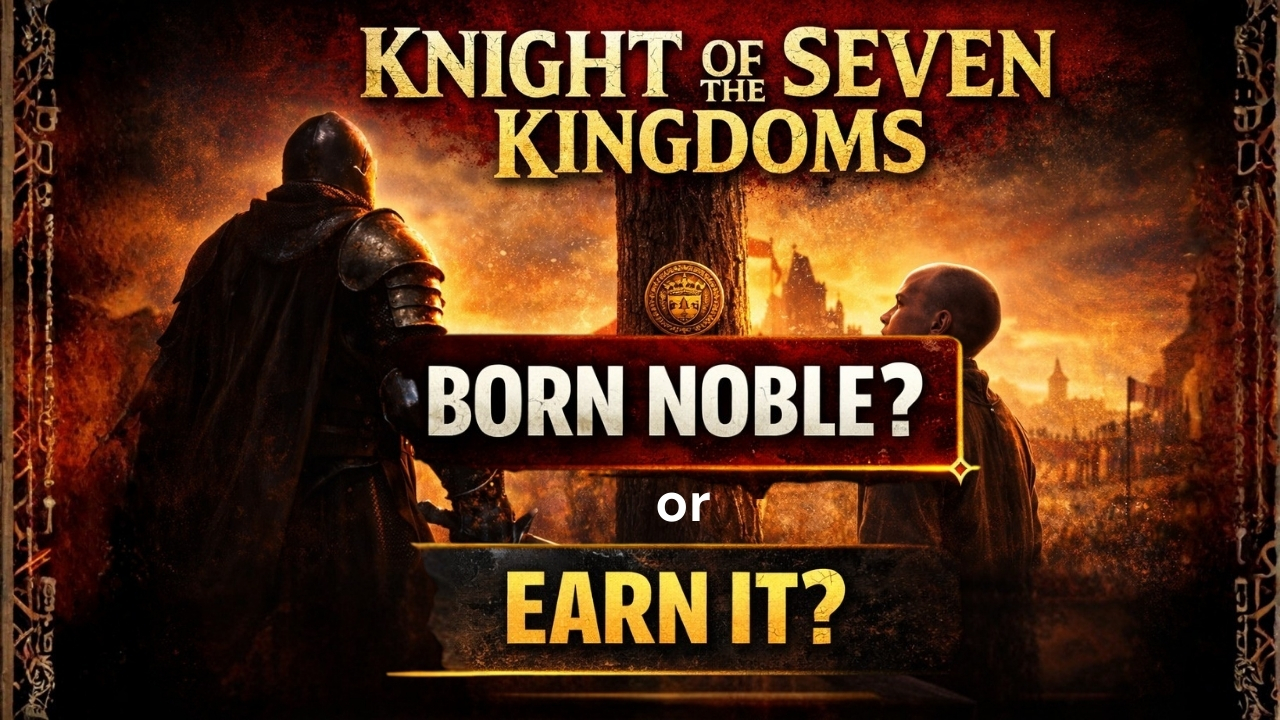
What Makes a King? Dunk, Egg, and the Soul of Westeros
Parallel Frequencies with Just Blane & Coco | Tube Tuesday
FULL Episode Here: https://youtu.be/ctydeQFMpm8
There's a war going on — and it has nothing to do with the Iron Throne.
On this week's episode of Parallel Frequencies, hosts Just Blane and Coco (Courtney Pearl) opened Tube Tuesday with a story that says more about modern fandom than any single episode of television ever could: fans of Breaking Bad and Night of the Seven Kingdoms are actively review-bombing each other on IMDb, dragging down the ratings of two genuinely brilliant pieces of art just to make sure their favorite comes out on top.
It's petty. It's exhausting. And Just Blane has five things you should do instead.
The IMDb Review Bombing Problem Nobody Is Talking About Enough
For years, Breaking Bad's "Ozymandias" held the top spot as the highest-rated episode of television on IMDb — a near-perfect 9.9 or 10.0, depending on when you checked. Then Night of the Seven Kingdoms Episode 5 came along and challenged that position. And instead of the internet celebrating two extraordinary achievements in storytelling existing at the same time, a faction of fans on both sides decided to sabotage the other.
Just Blane's five alternatives to review bombing:
- Actually watch what you're mad about. You gave it one star but zero minutes. If you're going to be upset, at least be informed.
- Start your own review channel. You have opinions and a phone. That's content. Use it.
- Learn how shows actually get made. 200+ crew members. 14-hour days. A stunt coordinator who probably bruised a rib for your entertainment. Consider that.
- Rewatch something you love. Celebrating your favorite is not diminished by someone else's favorite existing.
- Touch grass. Literally. It's free. No subscription. No algorithm. Go outside.
The larger point here — and Coco articulated it beautifully — is that this competitive toxicity is just the old patriarchal "one winner" energy applied to art. Two episodes can both be the best. Two shows can both deserve to be in the same conversation. That's not weakness. That's a richer world.
Night of the Seven Kingdoms: The Most Human Game of Thrones Story Yet
Set approximately 89 years before the events of the original Game of Thrones series (not quite 100, as Coco investigated), Night of the Seven Kingdoms follows Sir Duncan the Tall — "Dunk" — and a shaved-head kid everyone calls Egg. There are no dragons. There's no Iron Throne scheming. There are two guys, a horse, and a slowly unraveling destiny.
And it works.
Just Blane admitted the first two episodes felt slow — and he's right, they are. But the deliberate pacing is the entire point. This isn't House of the Dragon spectacle. This is the writers asking: what if we just followed the human stuff?
The Egg Reveal That Changes Everything
If you haven't reached Episode 3 yet, consider this your soft spoiler warning: Egg is Aegon Targaryen. Future king. The reveal hits not with dragons or battles, but with a quiet truth — he shaves his head because he doesn't want to look like his brother. It's a Game of Thrones moment that lands harder without a single drop of blood, which feels radical for this universe.
Just Blane didn't put it together until that episode. Neither did most viewers. And that's by design.
The Dynamic: You Don't Know Who I Am Meets You Don't Know Who You Could Be
Dunk and Egg operate in a rare storytelling space. Dunk is massive, earnest, not politically shrewd — a man who wandered into destiny because he was too polite to leave. Egg is a prince who is also, somehow, still a kid who doesn't know everything yet.
Their mentor-student dynamic raises a question the whole series is quietly building toward: if Egg grows up to be a ruthless king — and history tells us he does — is that Dunk's fault? Is Dunk the reason? Or does something happen to Dunk that breaks whatever honorable foundation Egg is developing?
What Actually Makes a King?
This is where Coco's analysis cuts to the core of why the entire Westeros universe keeps us coming back.
Every story in Game of Thrones — from the original series to House of the Dragon to Night of the Seven Kingdoms — circles the same question: what makes someone worthy of ruling? Kingship in Westeros is almost exclusively determined by birth, blood, and wealth. Noble family. Targaryen name. Gold. Title. Throne by inheritance.
But the characters we love most — Jon Snow, Dunk, even Daenerys at her best — represent something else. The idea that an honorable person, regardless of birth, can shape history. That influence doesn't require a crown.
Jon Snow was a bastard raised by the Stark family. Whatever made him the man he became came from how he was raised, not from his Targaryen blood. Egg is being raised — right now, in this story — by a giant earnest knight who takes his knightly oaths seriously. And Coco points out that the final episode of Night of the Seven Kingdoms even draws the parallel directly: some say madness is born in the womb, but maybe Dunk can influence Egg toward something different.
Daenerys wanted to "break the wheel" — the rotating cycle of who's on top that never changes anything for the people at the bottom. Coco is still upset about how that arc ended. So are a lot of people. Night of the Seven Kingdoms feels like the universe returning to that question with more care.
The Old Gods, the New Gods, and the Religion No One Discusses
One of the most fascinating threads in this episode discussion was religion — specifically, how Night of the Seven Kingdoms handles faith more directly than almost anything else in the Westeros canon.
In the original series, the old gods (tied to the trees, the godswood, the natural world) exist alongside the Seven (the church-like religion of knights and lords). Coco draws the parallel to the historical transition from paganism to Christianity in Northern Europe, the very culture that inspired George R.R. Martin's world-building.
What's striking about Night of the Seven Kingdoms is that nobody rolls their eyes. When knights invoke the Mother who protects the innocent in their vows, it lands as sincere. Not metaphor. Not tradition. Actual belief. That authenticity feels rare in fantasy television.
And then there's the penny nailed to the tree.
When Dunk drives a penny into the bark at the end of the season, Coco connects it to the old gods — the idea that trees are witnesses. They live for centuries. They are connected through root systems and fungal networks (yes, that's real science). If the three-eyed raven could see history through the trees in the original series, then the tree Dunk marked just became a record. A witness. A keeper of what happened.
"I have often thought," Coco said, "that the trees might actually be the gods. They're witnessing everything we do for hundreds of years at a time. They live longer than us."
The Takeaway: You Don't Have to Be Born Noble to Matter
In a universe obsessed with bloodlines and titles, Night of the Seven Kingdoms keeps returning to the same quietly radical idea: you don't have to be born noble to be important. You don't have to be powerful to make a difference. You don't even have to be well-known.
Dunk is a nobody from Flea Bottom who wandered into something bigger than himself and keeps showing up with integrity. That's the whole thing. That's what the show is about.
For anyone out there who wants to make a difference without being an influencer, without being born into wealth or fame or a legacy — this is your story too.
New episodes of Parallel Frequencies drop weekly. Subscribe wherever you listen to podcasts and visit https://www.ridethewave.media for more.
If you're building your own podcast, here are the tools Just Blane and the Ride the Wave Media team recommend:
- Record remotely with broadcast quality: Riverside FM
- Turn long episodes into short-form clips automatically: Opus Pro
- Build a beautiful podcast website without code: Podpage
Best Men’s Mental Health Podcasts | Trailer Park Thursday