
Week 15 NFL: Falcons Upset Bucs, Pitts Explodes
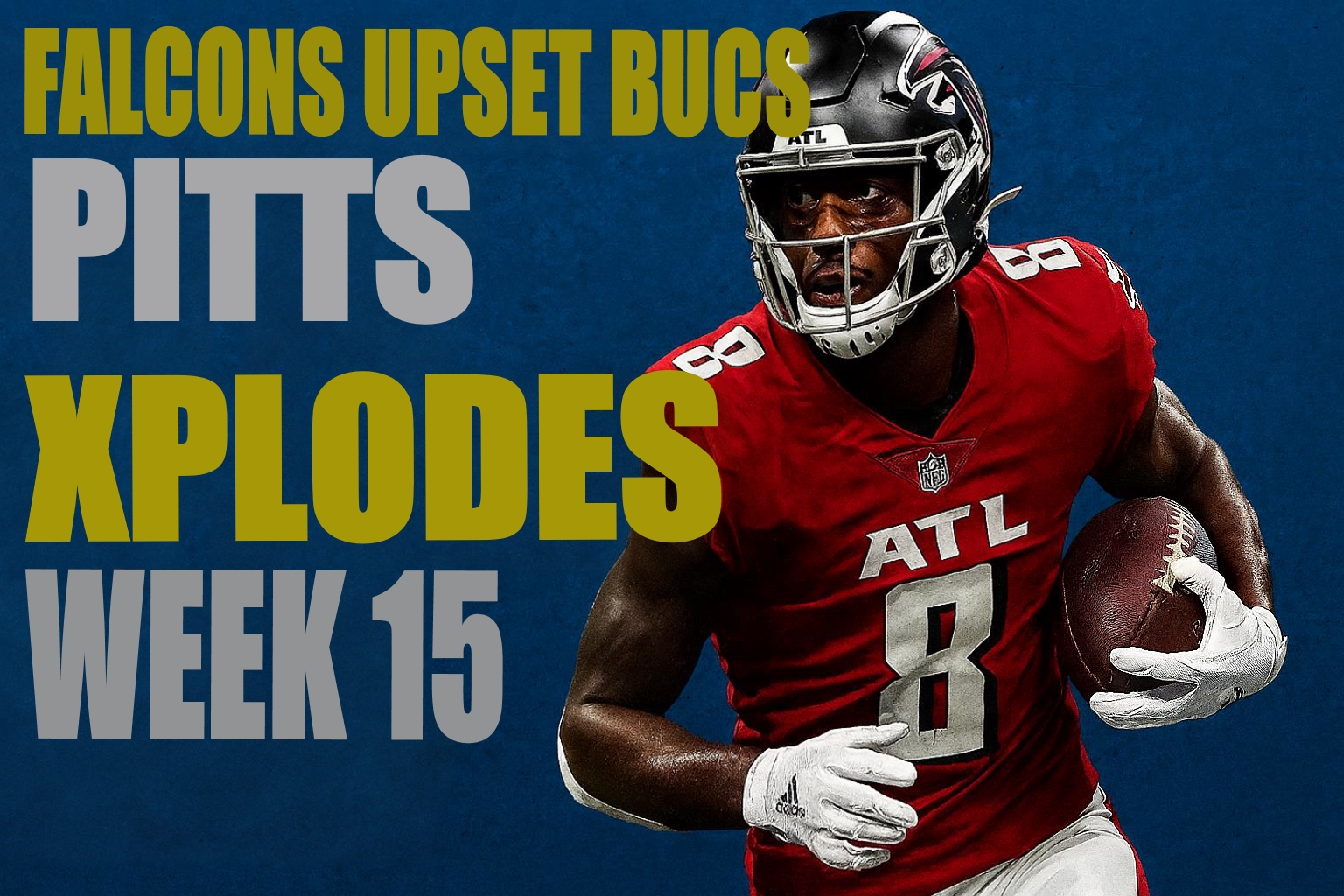
Week 15 NFL: Falcons Upset Bucs, Pitts Explodes, and December Chaos Across the League
Watch full episode here: https://youtu.be/6FP3rktL0sw
Introduction
Week 15 kicked off with the kind of Thursday night drama that makes December football irresistible. The Atlanta Falcons clawed back to beat the Tampa Bay Buccaneers 29–28, flipping the game on a pair of late, high‑leverage conversions and a relentless finishing kick on offense. In a division where every misstep reshapes the standings, the result detonated the NFC South narrative—and set the tone for a weekend packed with heavyweight matchups and storylines.
In this long‑form recap inspired by the latest episode of “Those Guys with Nick Ferguson and Alex Hardy,” we’ll unpack Atlanta’s comeback, diagnose Tampa Bay’s slide, and run through the biggest games on the slate: Patriots–Bills, Broncos–Packers, Chiefs–Chargers, Lions–Rams, and Vikings–Cowboys. We’ll also touch on Philip Rivers returning to the spotlight and what that might mean for quarterback‑needy teams. Whether you’re here for NFL news, fantasy football angles, player interviews, or game analysis, this is your comprehensive guide to the week.
Falcons vs. Buccaneers: A Comeback Built on Situational Football
How Atlanta Flipped the Script
For much of the night, Tampa looked comfortable—up two touchdowns in the third quarter with the defense forcing long fields and the offense feeding Mike Evans at will. Then Atlanta found life in crunch time. The Falcons stole momentum with third‑and‑28 and fourth‑and‑14 conversions late, the kind of back‑to‑back gut punches that demoralize defenses and breathe oxygen into a comeback. Those snaps weren’t flukes; they were the product of formation leverage, route depth, and a quarterback willing to hang in against pressure.
Kyle Pitts Takes Center Stage
With Drake London unavailable on the short week, the Falcons finally turned the offense over to Kyle Pitts—and the tight end delivered a monster 11‑reception, 166‑yard, 3‑TD performance. For fantasy managers, it was a playoff‑shifting eruption; for Falcons fans, it was equal parts thrill and frustration. The talent has always been there, yet featured usage has been inconsistent. When Pitts is schemed between the hashes on deep crossers, seams, and choice routes, he changes how safeties align and how linebackers flow. Atlanta leaned into that identity, and the offense instantly felt bigger, faster, and more multiple.
Tampa’s Collapse: Self‑Inflicted and Preventable
It’s too neat to say Atlanta “wanted it more.” The more accurate read is that Tampa failed in situational defense—especially in the fourth quarter—and drifted from what had worked offensively. A defense that had kept explosives in front suddenly surrendered chunk plays, and the offense chased milestones rather than field position. The result was shortened fields for Atlanta and long, empty possessions for the Bucs.
If Tampa wants to stabilize the NFC South race, the antidotes are straightforward:
- Press coverage discipline on boundary conversions late in games.
- Balanced drives that do not devolve into force-feeding one target.
- A renewed commitment to protection rules to keep the call sheet open.
The NFC South: Chaos With a Capital “C”
Atlanta’s win didn’t just muddy the waters—it splashed the entire conference. New Orleans and Carolina remain live foils in the puzzle, and Tampa’s back‑to‑back losses have transformed a once comfortable path into a razor’s edge. With division games stacked across the final weeks, the NFC South may be won not by the “best team,” but by the one most disciplined on third down, red zone, and two‑minute defense. Those are teachable edges—and December rewards teams that drill them.
Patriots vs. Bills: Hat-and-T‑Shirt Stakes and Identity Checks
Both teams come in with uneven rhythms. The Patriots have found answers on explosive shot plays and are flirting with the kind of complementary football that wins divisions: defensive line disruption, efficient ground game, and selective deep strikes from a quarterback confident throwing outside the numbers. The Bills, meanwhile, oscillate between unstoppable and self‑inflicted. When Josh Allen dons the cape, Buffalo can torch anyone; when the offense drifts into hero ball, drives stall and the defense is asked to hold up too long.
Keys to the game:
- Patriots’ deep ball vs. Bills’ shell rotations. If New England forces Buffalo into single‑high looks, verticals and posts become available.
- Buffalo’s run commitment. Balanced calls protect Allen and loosen intermediate windows.
- Trench health. Front‑seven availability will decide whether either team controls tempo through the ground game.
If the Patriots win, they seize leverage and breathing room in the AFC East. If Buffalo wins, the division tightens and the conference picture gets spicy. December football at its best.
Broncos vs. Packers: Strength on Strength in the Thin Air
The line says Green Bay, but the matchup says details. The Broncos’ defense has quietly become a sturdy, assignment‑sound unit—especially on the back end—while Jordan Love rides a multi‑week streak of decisive third‑down execution. Christian Watson’s speed stretches coverages horizontally and vertically, and Green Bay’s staff has leaned into rhythm throws that keep drives on schedule.
What to watch:
- Denver’s secondary vs. Green Bay’s spacing. If the Broncos squeeze split formations and press the seams, Love will need perfect ball placement.
- Pass‑rush lanes. Containment is everything against a quarterback who can extend but prefers structure.
- Broncos’ run identity. Efficient, schemed carries (duo, pin‑pull, wide zone) shorten games and limit Green Bay’s possessions.
It’s not Bo Nix vs. Love—it’s Love vs. Denver’s defense, and Denver’s offense vs. consistency. If the Broncos stack first downs and avoid negative plays, they can grind out a home win. If the Packers keep their third‑down mojo, Mile High won’t feel quite so inhospitable.
Chiefs vs. Chargers: A Rivalry Searching for Rhythm
This might be the strangest chapter in a rivalry that usually promises fireworks. Kansas City has looked a step slow—fatigue, injuries, and timing hiccups—and the Chargers are nursing a quarterback and skill corps that aren’t at full strength. For both sides, December success hinges on boring fundamentals:
- Hands and spacing: drops have derailed otherwise perfect calls.
- Protection health: without tackle continuity, passing concepts shrink.
- Red‑zone sequencing: layered route combinations to free the primary without forcing hero throws.
If one team can simply play clean, that team wins. Ugly games can be clarifying; this one might be exactly that.
Philip Rivers: What a 44‑Year‑Old Cameo Could Mean
It’s rare that a late‑season story grabs the entire league’s imagination, but Philip Rivers suiting up again does exactly that. It’s not about running; it’s about processing speed and ball placement. Rivers knows modern passing concepts cold, and he’s always been an anticipatory thrower who throws receivers open. The question is physical tolerance—how many hits can he take, and how fast does muscle memory return after years away?
There’s also a meta narrative: if Rivers plays well, quarterback‑needy franchises might reconsider the “only youth” model—especially for bridge seasons. Defense‑led teams with established lines and play‑action identities could prefer a veteran with encyclopedic knowledge over a developmental dice roll. It’s not a blueprint for five years; it’s a one‑season stabilizer. And yes, it’s theater. December loves theater.
Lions vs. Rams: The Goff–Stafford Trade, Revisited
We don’t often get true win‑wins in marquee trades, but Detroit and Los Angeles are living proof. The Rams cashed theirs in with a Super Bowl, rebuilding their identity with Matthew Stafford’s big‑arm anticipation. The Lions used the picks to shape the roster around Jared Goff, blending power and speed with backs like Jameer Gibbs (the “Sonic” to David Montgomery’s “Knuckles”) and a line capable of bullying fronts. At SoFi, this feels like a first‑to‑40 kind of game:
- Rams’ offense: big‑personnel packages, tight formations, condensed splits, and play‑action chunk shots to crossers.
- Lions’ offense: gap and zone runs to set play‑action, deep intermediate throws that attack voids behind second‑level flow.
- Defense: both teams will prioritize explosive control, but Stafford’s anticipation and Goff’s rhythm can still pierce good coverage.
If you enjoy scheme chess, this is your main course.
Sunday Night: Vikings vs. Cowboys—Volatility Meets Volume
The Vikings have talent, but volatility at quarterback has warped game scripts and receiver morale. Justin Jefferson expects volume and efficiency; when timing isn’t there, frustration grows. On the other sideline, Dallas boasts stars but a pass defense vulnerable to well‑timed intermediate routes and switch releases. With CeeDee Lamb trending in the right direction, expect the Cowboys to push pace and force Minnesota to match explosives.
Deciding factors:
- Protection vs. simulated pressure: Dallas loves creepers and late movement; Minnesota must ID rushers flawlessly.
- Third‑and‑medium: Jefferson’s option routes can destroy soft zones if the ball is on time.
- Turnover margin: both teams create swings with strip attempts and tip drills; December magnifies those moments.
It’s a game where the first quarter matters—who sets rhythm, who lands the first explosive, and whose defense can actually settle.
Fantasy Football Angles: Start/Sit Notes From the Week
- Kyle Pitts (Falcons): Featured usage without Drake London showcased his ceiling. If the scheme continues to isolate him on safeties and linebackers, he’s a set‑and‑forget starter.
- Mike Evans (Bucs): The volume is unquestioned; the caution is script. If Tampa chases, Evans’ targets spike—but so does variance.
- Patriots WRs: Monitor perimeter matchups vs. Buffalo shells. A single‑high tilt unlocks posts and go’s.
- Broncos RBs: Efficiency over volume; look for duo/pin‑pull calls near midfield and goal‑to‑go.
- Rams/Lions backs: This could be a fireworks night for Kyron Williams, Blake Corum, Gibbs, and Montgomery—especially if the game turns into a track meet.
- Cowboys WRs: If pace rises, CeeDee Lamb becomes a target hog; ancillary WRs benefit from Jefferson drawing coverage attention on the other sideline.
Five Things December Football Always Teaches
- Defense and discipline travel. The teams that survive road environments play clean situational downs and tackle in space.
- Explosives are coin flips; efficiency is a plan. You can’t rely on bombs every week. You can rely on first‑down runs, play‑action, and smart third‑down calls.
- Health in the trenches is a superpower. Continuity at tackle and guard quietly determines red‑zone success and down‑to‑down stability.
- Quarterback hero ball is a sugar rush. It wins moments, not seasons. Balanced calls that keep the QB in structure win December.
- Identity beats desperation. Teams that know who they are adjust faster, communicate better, and recover from negative plays without panic.
What Each Team Needs Most (Quick Hit Wish Lists)
- Falcons: Keep Pitts featured and marry play‑action to intermediate crossers. Penalty discipline will decide games.
- Buccaneers: Recommit to situational defense and sequencing that doesn’t devolve into force‑throws.
- Patriots: Stay selective with deep shots and leverage front‑seven disruption to control game pace.
- Bills: Balance the call sheet, protect Allen from hero ball, and reclaim third‑down rhythm.
- Broncos: Efficient run commitment and red‑zone sequencing that reflects the ground identity.
- Packers: Preserve third‑down timing; don’t let Denver’s secondary squeeze your splits without answers.
- Chiefs: Hands, health, and layered route concepts—this is execution season.
- Chargers: Protect the quarterback; embrace ball control until the skill group is fully healthy.
- Lions: Stick to physicality; use play‑action to attack mid‑field voids behind flowing second‑level defenders.
- Rams: Continue big‑personnel multiplicity and Stafford’s anticipation throws against rotated safeties.
- Vikings: ID pressures, hit Jefferson on schedule, and keep turnovers out of the equation.
- Cowboys: Feed CeeDee, but disguise your intentions; variety in formation and motion keeps defenses honest.
Conclusion: December Is a Magnifier
Week 15 reminded us why December football is different. The stakes compress. The margin for error shrinks. Every tipped ball, every third‑and‑medium, every protection bust reverberates across playoff odds and locker‑room belief. The Falcons’ upset wasn’t just about one player exploding; it was about a team executing in the moments that matter most while an opponent lost the plot.
Across the slate, the lesson repeats: identity, discipline, and health trump reputation. The Patriots and Bills are chasing division leverage through trench control and quarterback poise. The Broncos and Packers are set for a chess match of secondary spacing and third‑down precision. The Chiefs and Chargers need clean execution more than clever calls. The Lions and Rams are poised for a scheme showcase, while Vikings–Cowboys could turn into a fireworks display if timing clicks.
However it shakes out, remember: December rewards the boring stuff and elevates the brave. The teams that master both usually play in January.
Call to Action
👉 Subscribe to our channel: YouTube.com/@thoseguyssportspodcast
Get weekly breakdowns, player interviews, fantasy football insights, and bold predictions from Nick Ferguson and Alex Hardy—smart, fun, and built for fans who love the game within the game.

Best Men’s Mental Health Podcasts | Trailer Park Thursday