Tarot, Dinner Scenes, and the Stories That Shape 2026
Tarot, Dinner Scenes, and the Stories That Shape 2026
There’s something unmistakably different about how culture feels right now. Louder doesn’t mean deeper anymore. Faster doesn’t mean better. And the stories that linger aren’t the ones with the biggest explosions or the sharpest punchlines. They’re quieter. More intimate. They unfold in living rooms, at dinner tables, in moments where people can’t escape each other.
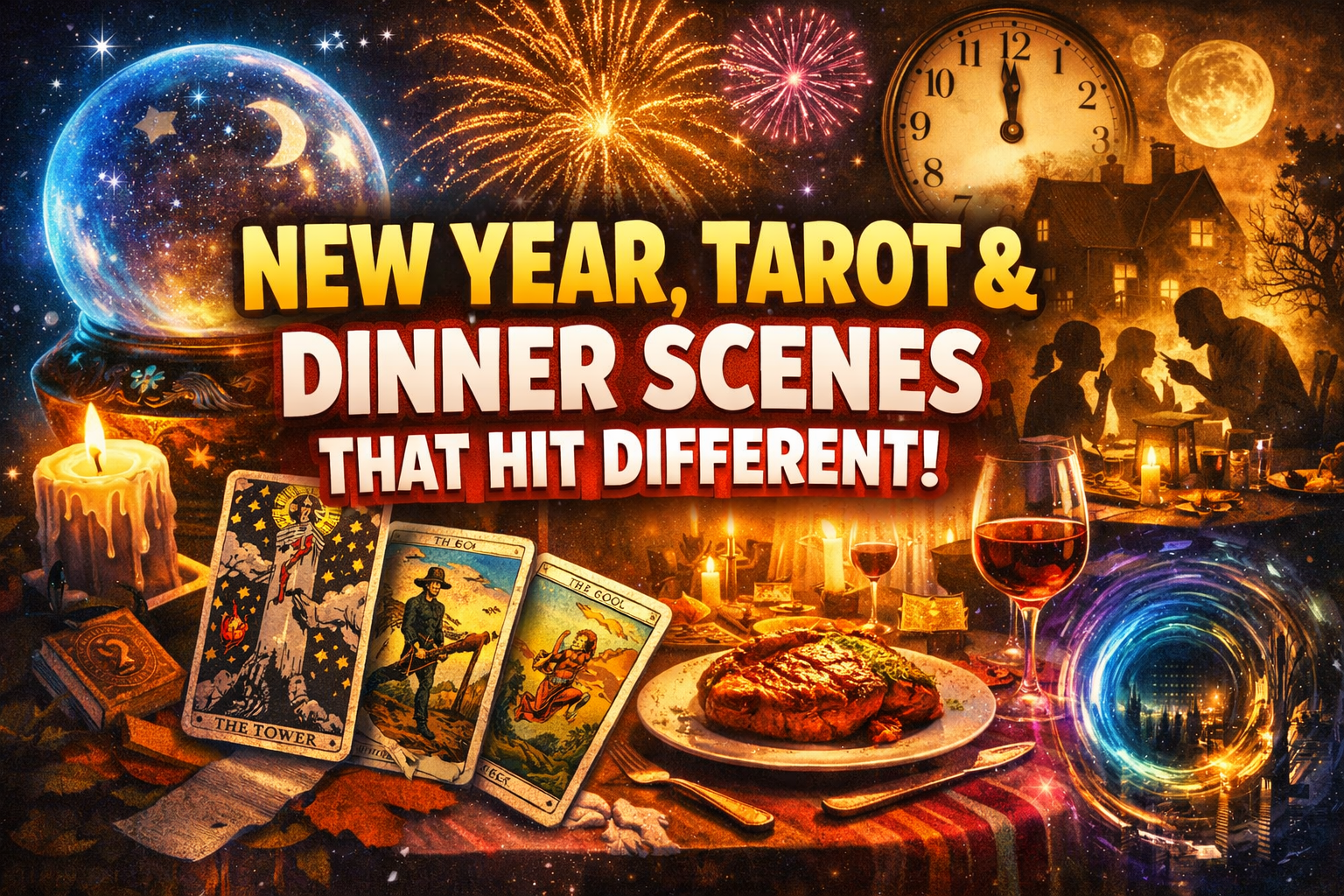
That’s the pulse running through this episode of Parallel Frequencies with Just Blane and Coco. As 2026 begins, the show isn’t interested in resolutions or trend forecasts. It’s asking better questions. Why are we staying in? Why do certain movie scenes haunt us long after the credits roll? And why does tarot suddenly feel less mystical and more practical?
This episode is a cultural temperature check, blending pop culture commentary, film analysis, spirituality, and humor into a conversation that feels grounded in how people are actually living right now.
Staying In Isn’t Missing Out Anymore
The episode opens with an observation that feels almost radical in its simplicity. Staying home is no longer a consolation prize. It’s a choice.
New Year’s Eve used to be about spectacle. Crowds. Noise. Countdown pressure. But for Blane and Coco, the night becomes something else entirely. Staying in. Watching Stranger Things. Eating comfort food. Letting midnight pass without ceremony.
This shift mirrors a larger cultural movement. Streaming culture has reshaped how we gather. The idea of collective experience hasn’t disappeared. It’s moved indoors.
People are choosing:
Comfort over chaos
Presence over performance
Meaning over momentum
It’s not withdrawal. It’s recalibration. And it sets the tone for everything that follows in the episode.
Tarot as a Creative Framework, Not a Gimmick
When Coco pulls tarot cards for Parallel Frequencies in 2026, the reading doesn’t feel theatrical. It feels practical.
The cards aren’t predicting outcomes. They’re naming patterns.
What’s Out in 2026
Self-doubt
External authority dictating creative direction
Waiting for permission
Overthinking instead of creating
What’s In for 2026
Playfulness
Creative independence
Trusting instinct
Letting friction sharpen ideas
This tarot reading becomes a creative philosophy. Not just for the show, but for anyone navigating art, media, or identity right now.
New Year’s resolutions are dismissed as performative. Instead, Coco frames growth as seasonal. Cyclical. Something that unfolds slowly rather than on command.
It’s a refreshing rejection of hustle culture, and one that resonates deeply in a moment when burnout has become the norm.
Why Dinner Scenes Are More Powerful Than Action Sequences
The heart of the episode is a deep dive into dinner scenes in film. Not because they’re flashy, but because they’re unavoidable.
Dinner scenes trap characters together. No escape routes. No jump cuts. Just conversation, tension, and truth.
Blane and Coco explore why these scenes often hit harder than horror set pieces or climactic battles. Films discussed include:
Hereditary
American History X
Edward Scissorhands
My Dinner with Andre
Coherence
In Hereditary, grief detonates at the table in a way that feels more terrifying than any supernatural threat. In American History X, a quiet dinner scene exposes how racism is learned, not declared. In Edward Scissorhands, innocence collides with suburban expectation in moments that are funny, painful, and revealing all at once.
The dinner table becomes a psychological arena. What’s said matters. What’s unsaid matters more.
These scenes work because they mirror real life. Most people aren’t haunted by ghosts. They’re haunted by conversations they can’t undo.
Coherence and the Fear of Not Knowing
Few films embody the episode’s themes as fully as Coherence. Set almost entirely around a dinner party, the film uses a passing comet to fracture reality itself.
What begins as polite conversation spirals into paranoia, identity collapse, and existential dread.
Blane’s passion for the film is unmistakable. Coherence isn’t just recommended. It’s championed. And for good reason.
The film refuses to explain itself. Answers are partial. Meaning is fragmented. Viewers are forced to sit with uncertainty.
That refusal is precisely what makes it powerful.
In a culture obsessed with clarity and closure, Coherence insists that not knowing is the point. And the announcement of an upcoming conversation with the film’s director signals something important about Parallel Frequencies. This is a show willing to live in ambiguity.
Horror Isn’t Elevated. It’s Honest.
A recurring theme in the episode is the idea of “elevated horror.” Blane pushes back on the term, and rightly so.
What’s often labeled elevated horror isn’t smarter. It’s more honest.
Films like Hereditary don’t rely on spectacle. They rely on emotion. Grief. Guilt. Loss. Universally human experiences that don’t require belief in monsters to be terrifying.
This reframing matters. It suggests that what scares us most isn’t the supernatural. It’s ourselves.
AI, Parallel Universes, and Creative Anxiety
The episode takes a playful turn when Blane and Coco discuss AI-generated content and experiment with AI-created podcast trailers.
Rather than panic, the reaction is curiosity.
The AI outputs are close. Almost right. But something is always off.
That uncanny gap becomes a metaphor. AI isn’t replacing creativity. It’s reflecting it imperfectly. And in that reflection, it reveals what still belongs uniquely to humans.
Taste. Voice. Judgment. Intention.
The conversation drifts into parallel universes and alternate versions of ourselves. It’s humorous, philosophical, and surprisingly grounding.
Technology doesn’t replace meaning. It exposes where meaning still lives.
Why Parallel Frequencies Works Right Now
What makes this episode compelling isn’t any single topic. It’s the connective tissue.
Pop culture. Tarot. Horror films. AI. Dinner tables. New Year’s Eve.
All of it points to the same truth. We’re craving intimacy over intensity. Conversations over conclusions. Stories that don’t rush to resolve themselves.
Parallel Frequencies doesn’t chase virality. It builds resonance. And in a media landscape dominated by outrage and speed, that approach feels quietly radical.
Subscribe and Stay Connected
If you’re drawn to pop culture commentary that blends film analysis, spirituality, and curiosity, Parallel Frequencies with Just Blane and Coco belongs in your rotation.
🎧 Subscribe on YouTube:
🌊 Explore more shows, creators, and resources at:
https://www.ridethewave.media
Tools That Power the Show (Affiliate Links)
Parallel Frequencies is produced using professional podcasting tools:
Riverside for high-quality remote recording
https://riverside.sjv.io/7aAMayOpus Pro for turning long-form episodes into shareable clips
https://www.opus.pro/pricing?via=5b5b73Podpage for building podcast websites that convert listeners into fans
https://www.podpage.com/account/signup/?via=just
Final Thought
2026 doesn’t need louder voices. It needs clearer ones.
This episode of Parallel Frequencies isn’t about predicting the future. It’s about noticing the present. The conversations we’re avoiding. The rooms we’re sitting in. The stories unfolding quietly at the table.
That’s where meaning still lives.
Best Men’s Mental Health Podcasts | Trailer Park Thursday