Robin Buckley and the Art of Awkward Adorableness in Stranger Things
Robin Buckley and the Art of Awkward Adorableness in Stranger Things
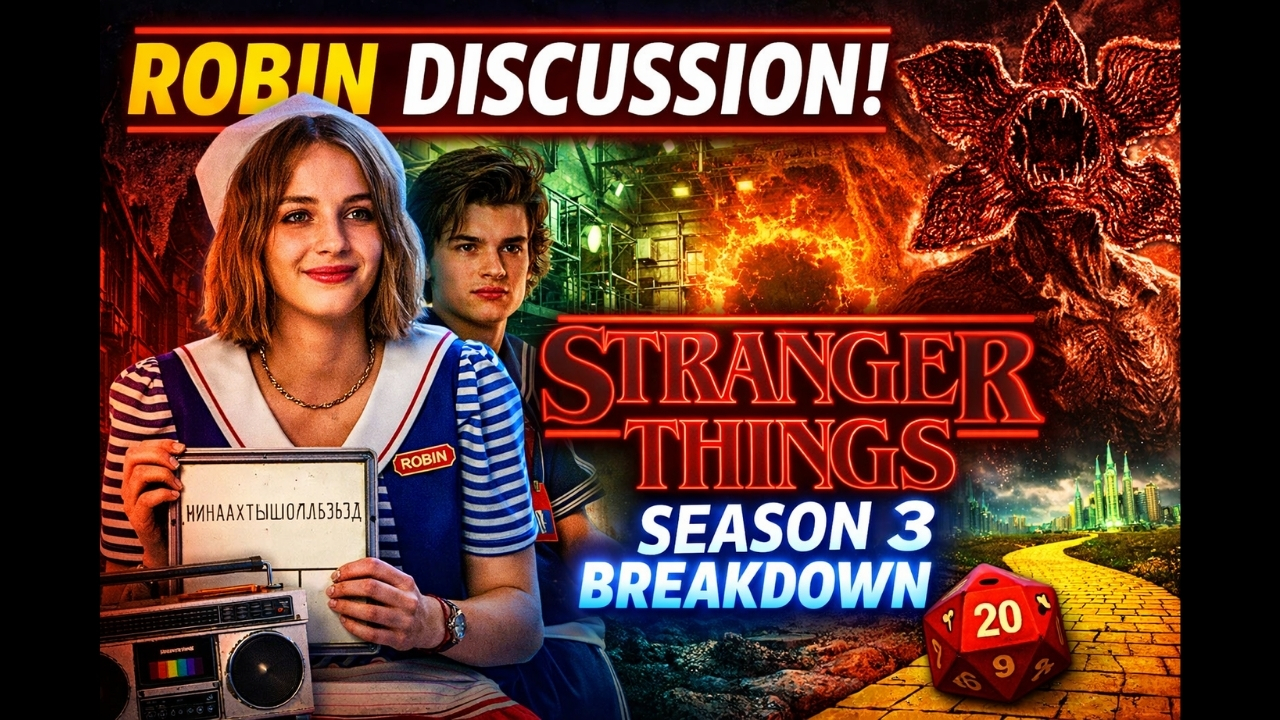
When Stranger Things introduced Robin Buckley in Season 3, the show didn’t just add a new character—it quietly reshaped its emotional center. Robin could have been a throwaway side character: the sarcastic coworker at Scoops Ahoy, a temporary foil for Steve Harrington, or comic relief dropped into the chaos of Starcourt Mall. Instead, she became one of the most beloved characters in the entire series.
Robin Buckley works because she feels real. She’s awkward without being cartoonish, confident without being arrogant, funny without trying too hard. And over the course of Season 3, she evolves from a background presence into a fully realized character whose journey adds depth, vulnerability, and authenticity to Stranger Things as a whole.
A New Face That Instantly Belonged
One of the most impressive things about Robin’s introduction is how naturally she fits into the world of Hawkins. When shows introduce new characters several seasons in, there’s often an adjustment period. Viewers need time to warm up. The character needs space to earn their place.
That never happens with Robin.
From her first scenes behind the Scoops Ahoy counter, she feels like she’s always been there. Her dynamic with Steve Harrington doesn’t feel forced or engineered—it feels like two teenagers stuck in a summer job, killing time with sarcasm and shared boredom. The setting helps, of course. A mall job naturally throws together people who might never interact at school. But Robin’s presence goes beyond circumstance. She rolls with the absurdity of everything almost instinctively.
When Russian codes, secret messages, and underground labs enter the picture, Robin doesn’t freeze or overreact. She leans in. She’s curious. She wants to know more. That curiosity becomes the bridge that pulls her deeper into the story—and deeper into the Stranger Things ensemble.
Maya Hawke’s Breakout Performance
It’s impossible to talk about Robin Buckley without talking about Maya Hawke. As the daughter of Uma Thurman and Ethan Hawke, she could have easily been dismissed as another case of Hollywood nepotism. Instead, she delivered one of the most refreshing performances the series has seen.
Part of what makes Robin so effective is that much of her dialogue was shaped around Hawke herself. The Duffer Brothers reportedly rewrote aspects of the character after seeing her audition, tailoring Robin’s humor and cadence to match Hawke’s natural delivery. That choice pays off in every scene.
Robin’s humor isn’t punchline-based. It’s observational, self-aware, and slightly nervous. She talks fast, over-explains, backtracks, and fills silence with words. It’s the kind of humor that feels lived-in rather than scripted—and that authenticity is why Robin resonates so deeply with audiences.
From Scoops Ahoy to Russian Labs
Robin’s journey in Season 3 is especially compelling because she doesn’t start with any context. Unlike Steve, Dustin, or the original Hawkins crew, she doesn’t know about the Upside Down, the gates, or the monsters. She’s just a teenager working a job, decoding a strange message for fun, and suddenly she’s infiltrating a secret Russian base beneath a shopping mall.
That outsider perspective matters. Through Robin, viewers are reminded how bizarre the Stranger Things world actually is. She reacts with confusion, disbelief, and curiosity—often all at once. She asks questions others already know the answers to. She grounds the story in realism, even as it spirals into sci-fi horror.
Her willingness to stay involved despite not fully understanding what she’s facing speaks volumes about her character. Robin isn’t fearless; she’s engaged. She wants answers. She wants to be useful. And she refuses to step away once she realizes how big the situation really is.
The Steve Harrington Effect
Robin’s relationship with Steve Harrington is one of the most rewarding dynamics in the entire series. At first glance, it looks like a familiar setup: former popular guy, witty girl coworker, potential romance brewing in the background.
But Stranger Things does something smarter.
Instead of turning Robin into another love interest, the show builds a genuine friendship—one rooted in mutual respect, vulnerability, and growth. Steve isn’t the alpha male he once was. He’s been humbled by heartbreak, responsibility, and repeated failure. Robin doesn’t idolize him or resent him. She sees him clearly, flaws and all.
Their conversations feel honest. They tease each other, challenge each other, and slowly let their guards down. What makes their bond special is that it’s not transactional. Neither of them is trying to impress the other. They’re just surviving together.
The Bathroom Scene That Changed Everything
One of the most powerful moments in Season 3—and in Stranger Things as a whole—comes during Robin’s coming-out scene with Steve in the bathroom.
Up to that point, the show allows viewers to assume a romantic payoff. The chemistry is there. The tension feels familiar. But when Robin finally explains why she’s always been distant, why she’s struggled with connection, the story takes a meaningful turn.
Robin’s admission isn’t dramatic or sensationalized. It’s quiet. Vulnerable. Awkward. She talks about Tammy Thompson, about longing, about feeling invisible. The moment lands because it feels deeply personal—especially within the 1980s setting, when coming out carried real social and emotional risk.
Steve’s reaction matters just as much as Robin’s revelation. He doesn’t lash out. He doesn’t panic. He listens. He accepts. He’s disappointed—not because of who Robin is, but because he realizes the connection he felt was never romantic.
And somehow, that honesty makes their bond stronger.
Representation Without Spectacle
Robin’s sexuality is treated with respect because it isn’t used as a plot twist or a moral lesson. It’s simply part of who she is. The show doesn’t frame her identity as shocking or controversial—it frames it as human.
This is especially important given the time period. While LGBTQ+ people have always existed, the social climate of the 1980s made openness far more dangerous. Robin’s fear, hesitation, and relief feel authentic. Her vulnerability is rooted in reality, not modern revisionism.
By handling her story with nuance, Stranger Things avoids tokenism. Robin isn’t “the gay character.” She’s a smart, funny, complicated teenager navigating identity, friendship, and fear—just like everyone else in Hawkins.
Growing Up in the Middle of Chaos
Robin’s arc also reflects one of Stranger Things’ core themes: growing up while the world is falling apart.
Season 3 marks a turning point for the series. The kids are no longer just kids. Relationships are forming. Childhood innocence is fading. Trauma is accumulating. Robin enters the story at this exact moment of transition, embodying the confusion and self-discovery that comes with adolescence.
She doesn’t have all the answers. She doesn’t know where she fits yet. But she’s brave enough to speak her truth—and that bravery resonates beyond her individual storyline.
Why Robin Buckley Endures
Robin Buckley endures because she represents something rare in genre television: sincerity without sentimentality. She’s funny without being shallow, vulnerable without being fragile, and strong without being hardened.
Her presence elevates the characters around her. Steve becomes more self-aware. The group becomes more inclusive. The story gains emotional texture.
In a show filled with monsters, secret labs, and supernatural threats, Robin reminds us that the scariest—and most meaningful—moments are often the quiet ones. The conversations in bathrooms. The confessions made in fear. The friendships formed when expectations are stripped away.
Robin Buckley isn’t just a great Stranger Things character. She’s a reminder that representation, when done right, doesn’t feel like messaging—it feels like life.
And that’s why she belongs in Hawkins.
Best Men’s Mental Health Podcasts | Trailer Park Thursday