Coherence Explained: Regret, Reality, and the Life You Didn’t Choose
Introduction
Some movies entertain you. Others sit beside you quietly and start asking dangerous questions.
Coherence is one of those films.
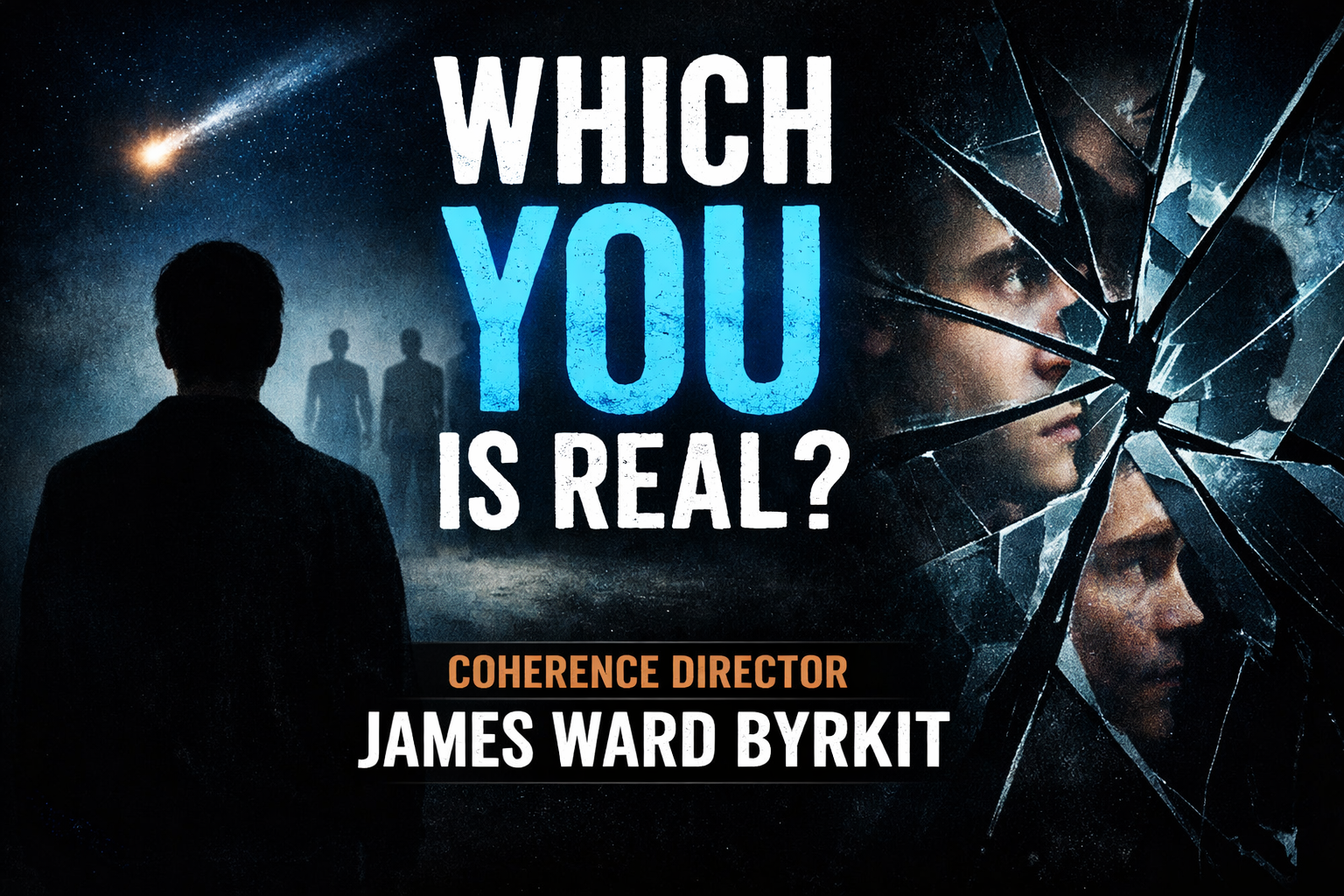
In this episode of Parallel Frequencies with Just Blane & Coco, director James Ward Byrkit joins us for an expansive conversation about creativity, regret, alternate realities, and why curiosity often reveals more truth than fear ever could. What unfolds isn’t just a breakdown of a cult sci-fi classic, but a roadmap for artists, filmmakers, and humans trying to make peace with the lives they didn’t choose.
A Film Built on Trust, Not a Script
Coherence was filmed without a traditional screenplay. Instead, Byrkit built a structure, handed actors fragments of information, and trusted them to live inside uncertainty.
The result feels unnervingly real because it is.
By removing the safety net of over-planning, Byrkit discovered something essential: when actors stop trying to be “right,” truth slips through the cracks. Dialogue overlaps. Tension simmers. Humor misfires. Humanity shows up.
Regret as the True Monster
While Coherence is often labeled a multiverse film, its real subject is regret.
The terror isn’t that there are infinite versions of reality.
It’s that somewhere, a version of you chose differently.
That idea resonates because it’s universal. Everyone carries a moment they replay. A decision that could’ve gone another way. Byrkit grounds cosmic ideas in deeply human ones, making the film linger long after the plot resolves.
Curiosity Over Dread
Originally imagined as a more traditional horror film, Coherence evolved into something quieter and more unsettling.
Instead of screaming danger, it whispers questions.
What would you do if the rules changed slowly?
Would you run… or would you look closer?
Curiosity becomes the engine that pulls characters forward, and viewers right along with them.
Creativity Thrives Under Limits
Byrkit compares the film’s production to agile development: start with only what you need, then let the project reveal what it wants to become.
This philosophy echoes across creative disciplines. Too many tools can paralyze. Fewer choices can sharpen intention.
It’s a lesson creators at Ride The Wave Media live by daily.
Tools That Support Creative Flow
To build meaningful conversations like this one, we rely on tools that remove friction:
• Riverside for clean, reliable recordings
• Opus Pro for intelligent clip distribution
• Podpage for turning podcasts into discoverable homes
Each tool supports the same philosophy Coherence embodies: clarity through simplicity.
Conclusion
Coherence endures because it respects its audience.
It doesn’t explain everything.
It doesn’t hand you comfort.
It invites you to sit with uncertainty and decide who you are.
And maybe that’s the point.
🎧 Subscribe, explore more conversations like this, and join us at
👉 https://www.ridethewave.media
Best Men’s Mental Health Podcasts | Trailer Park Thursday