Coherence (2013): The Most Rewatchable Sci-Fi Horror Film You’ve Probably Never Seen
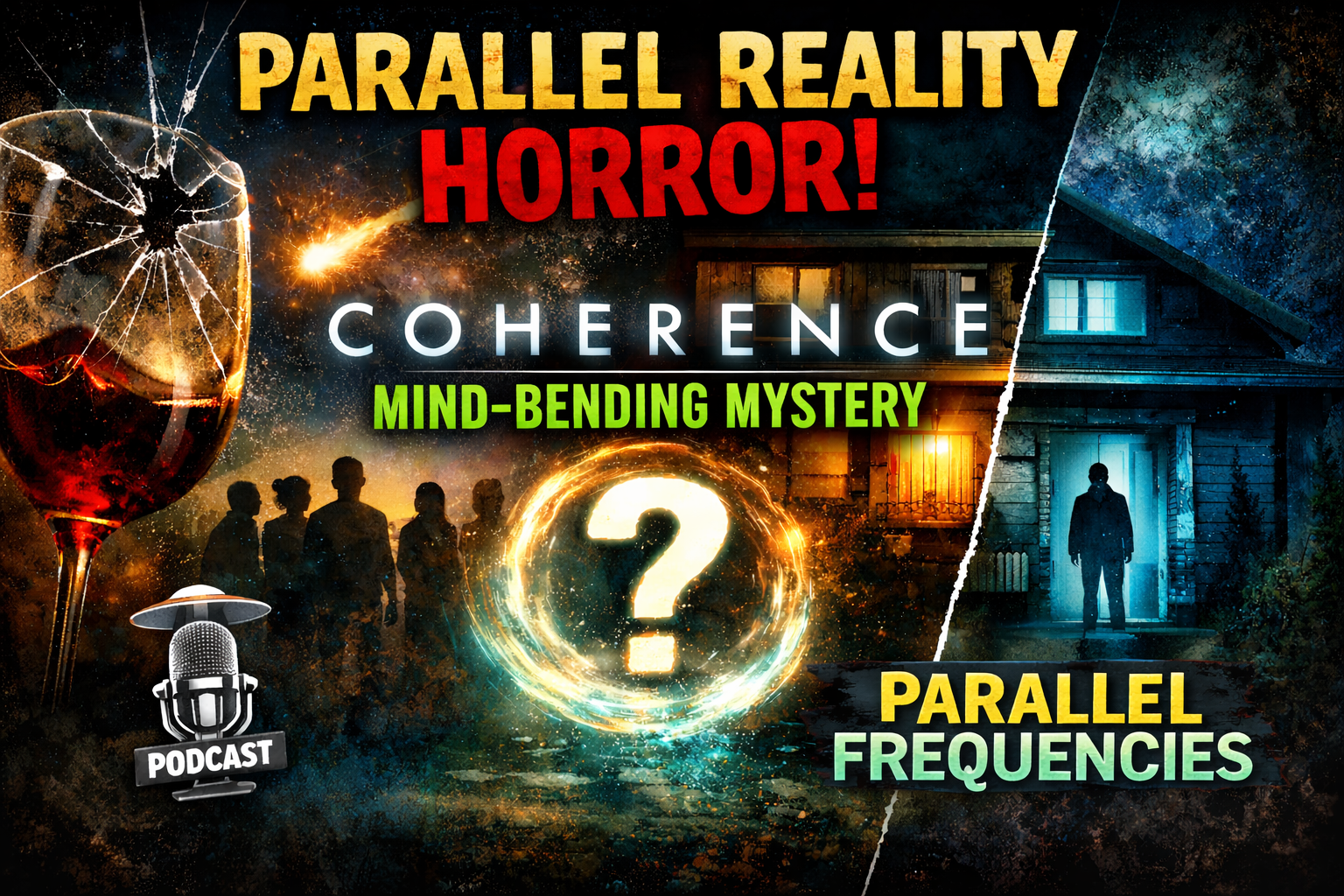
Coherence (2013): The Most Rewatchable Sci-Fi Horror Film You’ve Probably Never Seen
There are movies you watch once and forget.
There are movies you love.
And then there are movies that crawl inside your brain, rearrange the furniture, and dare you to watch them again.
Coherence is that third kind of movie.
Released quietly in 2013 with almost no traditional marketing, Coherence has become one of the most talked-about cult sci-fi horror films of the last decade, entirely through word of mouth. No superheroes. No CGI spectacle. No clear answers. Just a dinner party, a comet passing overhead, and reality slowly unraveling.
I’m not exaggerating when I say I’ve watched Coherence over a hundred times. And I’m still finding new details.
That alone should tell you something.
A Dinner Party That Breaks the Universe
On paper, Coherence sounds deceptively simple. A group of friends gathers for a dinner party on the night a comet passes unusually close to Earth. The power flickers. Phones stop working. Strange things begin happening outside the house.
That’s it. That’s the setup.
What makes Coherence extraordinary is how quickly it escalates without ever feeling flashy. The film traps you in one location, with one group of people, and lets paranoia, logic, and fear do all the heavy lifting.
This isn’t a movie about monsters or jump scares. It’s about uncertainty. About choice. About the quiet terror of realizing you may not be where you think you are… or who you think you are.
The horror doesn’t scream. It whispers.
Why Coherence Feels So Real
One of the reasons Coherence feels unnervingly authentic is its production style. Much of the dialogue was improvised. The cast was intentionally kept in the dark about where the story was going. Scenes were shot with minimal lighting and handheld cameras, giving the film a grounded, almost documentary feel.
You’re not watching actors hit marks. You’re watching people react.
That realism makes every argument sharper, every hesitation heavier. When characters make bad decisions, they feel like the same bad decisions any of us might make under pressure. That’s what makes the film linger.
You don’t walk away thinking, “They were idiots.”
You walk away thinking, “I might’ve done the same thing.”
The Power of Ambiguity
Some viewers hate Coherence for the same reason others love it: it doesn’t explain itself.
There’s no tidy monologue at the end. No diagram spelling everything out. The film trusts you to keep up, to fill in the gaps, and to argue about what actually happened.
And that’s not a flaw. That’s the point.
Some of the best sci-fi films in history leave room for interpretation. They respect the audience enough to let the mystery breathe. Coherence lives in that tradition. The unanswered questions aren’t mistakes. They’re invitations.
Every rewatch becomes a new conversation.
A Cult Classic Built on Word of Mouth
Coherence didn’t explode on release. It crept.
People discovered it years later on streaming platforms like Peacock and Amazon Prime. Friends recommended it with a warning: “Don’t look it up. Just watch it.”
That kind of recommendation is powerful. It creates trust. It also creates curiosity. The film’s reputation grew organically, driven by late-night debates, Reddit threads, and fans forcing their friends to sit down and watch it immediately after the credits rolled.
I’ve personally restarted the movie the moment it ended more than once. Not because I was confused, but because I wanted to see where the seams were. And Coherence rewards that impulse.
Elijah Wood, Shudder, and Genre Credibility
One of my favorite personal anecdotes about Coherence involves Elijah Wood. Years ago, he included the film on a list of essential genre movies for AMC or Shudder. That alone says a lot.
When actors and filmmakers who genuinely love the genre quietly champion a movie, it carries weight. Coherence didn’t need billboards. It needed advocates.
Even now, there are still plenty of people who haven’t seen it. And every time someone watches it for the first time, the cycle starts again: disbelief, obsession, debate.
That’s how cult classics survive.
Why We’re Doing a Full Episode on Coherence
Some movies deserve more than a passing mention. Coherence is one of them.
On Parallel Frequencies, we decided this film needed a full deep dive. Not a recap. Not a plot summary. A real conversation about why it works, why it unsettles people, and why it refuses to fade from memory.
And then something incredible happened.
I reached out to James Ward Byrkit, the director of Coherence. Not expecting anything. Just respect, curiosity, and appreciation for the work.
He said yes.
The director of Coherence is coming on the show.
Talking to the Creator Without Killing the Mystery
One thing I want to make clear: the goal of that conversation isn’t to strip the movie of its ambiguity. Sometimes the best answer is no answer at all. Some stories are stronger when they remain open.
If James Ward Byrkit comes on and says, “It’s up to interpretation,” that’s a win. Because that’s what Coherence has always been about.
This isn’t a puzzle to be solved once and filed away. It’s a film that changes depending on where you are in your life when you watch it. The questions it raises hit differently at different times.
That’s rare.
Independent Film at Its Best
Coherence is also a reminder of what independent filmmaking can achieve without studio interference. It proves you don’t need a massive budget to create something memorable. You need trust. Risk. And a willingness to let ideas breathe.
The film company behind it, Oscilloscope, has a reputation for championing thoughtful, boundary-pushing projects. Coherence fits that DNA perfectly.
It’s lean. It’s smart. And it doesn’t apologize for being strange.
Why Coherence Still Matters in 2026
In an era dominated by content overload, Coherence stands out because it demands attention. You can’t scroll your phone while watching it. You can’t half-listen. The movie punishes distraction.
That alone makes it radical.
It also taps into something deeply human: the fear that one small decision could send your life down a completely different path. The idea that there may be versions of ourselves who made slightly better or worse choices.
That’s not just sci-fi. That’s existential.
Watch It Before the Conversation
If you haven’t seen Coherence, stop reading this and go watch it. Don’t read a plot breakdown. Don’t spoil it for yourself. Just watch.
Then sit with it.
Then rewatch it.
Then join the conversation.
Because when we talk to the director, the questions will come from love, curiosity, and years of obsession. And that’s the only way a movie like Coherence deserves to be discussed.
Stay on the Frequency
We’ll be breaking this film down in depth on Parallel Frequencies, alongside conversations about pop culture, media history, and the strange ideas that shape the world around us.
You can find more episodes, projects, and creative explorations at www.ridethewave.media.
Some movies fade when the lights come up.
Coherence follows you home.
And once it does, it never really leaves.
Best Men’s Mental Health Podcasts | Trailer Park Thursday